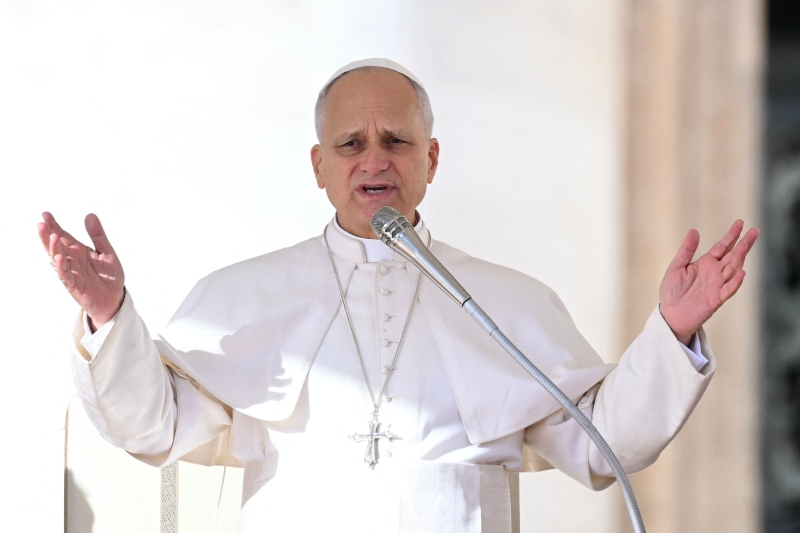
When God sings with his creations, ChatGPT will not be part of the choir. Pope Leo XIV spoke out against incorrect AI usage in a video talk during the National Catholic Youth Conference, directly telling students, “Don’t ask it to do your homework for you.” “It cannot offer real wisdom,” he said. “It misses a very important human element. AI will not judge between what is truly right and wrong, and it won’t stand in authentic wonder before the beauty of God’s creation.” AI cannot love a sunset, a mountain range, or Cynthia Erivo’s battle cry during “Defying Gravity” in Wicked.
Pope Leo’s advice extended past book reports, too. “Be prudent, be wise, be careful that your use of AI does not limit your true human growth,” he told the students. “Use it in such a way that if it disappeared tomorrow, you would still know how to think, how to create, how to act on your own, how to form authentic friendships.” He finished by saying that “AI cannot ever replace the unique gift that you are to the world.”
This is not the first time Pope Leo has expressed concerns about young people’s use of artificial intelligence: He put out a pontifical message in June warning adults to help guide children away from misusing generative AI. “All of us, I am sure, are concerned for children and young people, and the possible consequences of the use of AI on their intellectual and neurological development,” he said. “Our youth must be helped, and not hindered, in their journey towards maturity and true responsibility … No generation has ever had such quick access to the amount of information now available through AI. But again, access to data — however extensive — must not be confused with intelligence.”

Click here to preview your posts with PRO themes ››
Pope Leo’s technology skepticism extends beyond generative AI. The analog Pope also railed against algorithms at a meeting with filmmakers earlier this month, saying he prefers true art that doesn’t just show people what they want to see. “The logic of algorithms tends to repeat what ‘works,’ but art opens up what is possible,” he said. “Not everything has to be immediate or predictable. Defend slowness when it serves a purpose, silence when it speaks, and difference when evocative. Beauty is not just a means of escape; it is, above all, an invocation. When cinema is authentic, it does not merely console but challenges.” So, did he like Conclave (2024) or not?