Contents

On That Note
Welcome to On That Note, a rock and roll-centered column that will dive into the big stories, hot trends, and plain-old crazy ideas coming out of the music industry.
There’s not a year that goes by when the White Stripes aren’t approached with a blank-check offer to reunite. The evergreen nature of the ask has become an amusing tradition of sorts for Matt Pollack, part of Jack White’s management team. “It’s not about money,” he tells me. “Their breakup wasn’t rooted in acrimony. It was their time to make a decision and not to be a band any longer. That stands because Jack and Meg White are people of belief.” Still, concert promoters are nothing but persistent — there’s always someone knocking at the door, with a smile, and hoping circumstances may change to entice a dormant band to cash in for a new tour to the tune of tens, or potentially hundreds, of millions. Nearly 20 years ago, each member of the Police commanded $1 million per night for their go-around, which is already a startling sum until you realize they played 150 shows. The right band today could easily command an even higher total.
The feeding frenzy for the next big reunion is the dominant conversation for the future of live entertainment. Music promoters, both craving the one-upmanship and genuine satisfaction of getting a lucrative band back on a stage, have more money at their disposal than ever before to make their pipe dreams a reality. “They’re in the business of surprise,” Pollack says of the attitude. “If they can own a moment and be the impetus for creating the situation where something gets back together, that’s a major feather in any promoters’ cap.” Even the most principled of artists are being approached left and right and are starting to understand that the big-money offers just can’t be refused. Just last month, both Rush and No Doubt announced their triumphant returns to the stage, the former reversing the staunch mind-set they had as recently as January.
That alchemy worked on a band no one remotely suspected would have anything to do with each other ever again: Oasis announced that they would embark on an international reunion tour throughout the summer and fall of 2025. Noel and Liam Gallagher, whose brotherly feud is just as legendary as it is profane, have maintained the image of consummate professionals bringing spiritual vibes to the area, often walking out to the stage hand in hand and embracing in hugs after the encore. It was later revealed that Paul “Bonehead” Arthurs, the band’s co-founder and rhythm guitarist, was a helpful mediator in persuading the Gallaghers to consider serious reunion offers. The bruvs are reportedly making £50 million for their efforts for 41 shows.
Mike Kaufman, an executive producer who handles festival livestreams, believes Oasis’s narrative is the perfect template for what promoters will be pursuing with bands in 2026 and beyond. “There’s the demand for the act and how long they’ve been away,” he explains. “It had been 15 years since they’ve toured, so there was a pent-up demand combined with what seemed like an insurmountable riff between the two brothers. There was a great story there, but ultimately there was a new generation who wanted to see them.” An added plus for bands is how the ticket industry, albeit one that’s a broken system, has changed since they’ve been away — there’s simply a bigger payday to be realized than ever before. “Tickets were pretty expensive 15 years ago, but now people pay more for them,” Kaufman notes. “The offers Oasis were given now were double what they were offered five or ten years ago. So they’re not going to sell the tickets for less.”
Then there’s the somewhat dispiriting fact that stadium-level rock bands are dwindling for younger generations, so much so that these offers to push out older acts are almost done by necessity. “There’s no one coming up like that. You’ve got Oasis and Coldplay. Who’s going to be that in years to come?” Kaufman asks. “We don’t have those types of artists right now.” Green Day, Foo Fighters, and My Chemical Romance have capably sold out stadiums over the past year with the youngest of these names, MCR, approaching their 50s.
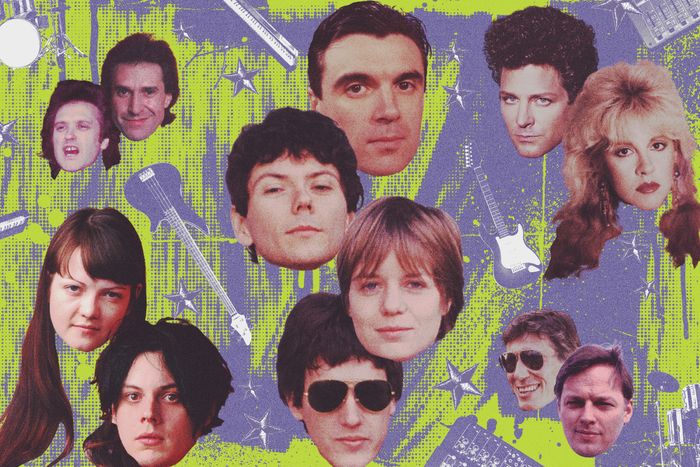
There’s a real opportunity, then, for any band with cachet to rehire their accountants and secure one last legacy-cementing swan song. Pollack says that while not every situation is the same, there are some universal truths being cranked up to 11. “Any time you have a band at that level that reaches millions of people globally, those bands never go away,” he says. “Then all of a sudden you have this incredible moment where everything galvanizes and then, boom, we’re having this conversation about it. They seem more far and few between.” Here are the bands that, according to industry insiders, stand to make the biggest financial impact if they were to put aside their differences and pick up their instruments once again.
Fleetwood Mac
Far and away, they were the band that analysts say are best primed for the next big reunion. “They would be tremendously well received,” says publicist and industry veteran Bob Merlis. Perpetually feuding for five decades, the band hasn’t performed since 2019 and lost Christine McVie to a stroke in 2022. Fleetwood Mac fired Lindsey Buckingham before that final tour, a decision that was purported to have been initiated by Stevie Nicks. “You have this perceived bad blood between Lindsey and Stevie, which has always been part of that band’s dynamic.” However, the former paramours set aside their differences this year to rerelease their first album, Buckingham Nicks, as they both warmly wrote about the project on social media and collaborated on promotional efforts. And as an additional exclamation mark, they’re now back on speaking terms. Like “Bonehead” for Oasis, Mick Fleetwood has been a consistent middleman for the duo over the past decade. “Lindsey and Stevie together would be something, but they cannot call themselves Fleetwood Mac without Mick and John McVie.”
Merlis notes another element that may encourage a reunion: Fleetwood’s restaurant in Lahaina, Hawaii, burned down in recent wildfires and he may need an influx of money that only a tour can provide, which the other band members could be sympathetic to, given their history. “I’m guessing he was insured, but he’s not a songwriter,” he says. “Ergo he’s not getting revenue from the catalogue.” Nathan Brackett, a former Amazon Music executive and current music writer, agrees that money is the prominent reason for reunions and could influence Fleetwood Mac. “I do think there’s one rule: The drummer always wants it to happen. Often they don’t get songwriting credits and are waiting for stuff to happen,” he explains. “They’re always in favor. It’s often how well they can persuade the people who are going to make the decision. So it’s money but also inequalities in songwriting-credit makeup.”

Click here to preview your posts with PRO themes ››
The Kinks
For some bands, a reunion can be tied to its legacy and the desire to conclude a career in the most positive light. Merlis thinks the Kinks, who last toured in the mid-’90s amid a period of declining commercial viability, would be welcomed with a loud renaissance. “There’s a band a lot of people don’t think about because they started so long ago,” he explains. “They’re contemporaries of the Beatles. If the Davies brothers figure that out, this would solidify their place in history. I spend a lot of time with people who compile reissue albums. Their sales are huge. To use the Oasis analogue: You’ve got fighting brothers, and they said it would never happen. Make it happen, and disprove it.”
Pink Floyd
“There’s a band who could command the most money and won’t be doing it,” Kaufman asserts. “It’s just not going to happen.” The public rows between David Gilmour and Roger Waters have escalated to a very personal level, particularly in regards to their political leanings about Ukraine and the Israel-Palestine conflict. Their recent $400 million catalogue sale to Sony Music put the final nail in the reunion coffin. “David’s motivation for that was so he would never have to deal with Roger again,” Kaufman adds. “They don’t want to deal with each other. It’s a shame they don’t want to do it.”
Talking Heads
On a different end of the spectrum, you have the bands whose reunion decisions are dictated by their best-known member. The chief example of this is Talking Heads, whose front man, David Byrne, has enjoyed a prolific solo career since their disbandment, which culminated in a special Tony Award for his American Utopia stage show. (All he needs is the E to EGOT.) Despite Byrne continuously asserting his lack of interest in getting the band back together and lingering resentments of the other members, Talking Heads got on well enough to extensively promote the rerelease of Stop Making Sense in 2023. “Talking Heads would clean up,” Kaufman says. “They can all play. But it goes to David. He’s not motivated purely by money or else you would’ve seen a Talking Heads tour years ago. It wouldn’t be at the same level of Oasis, but it would do very good business and work internationally. They’d be bigger now than their last tour.”
Led Zeppelin
Robert Plant, who has embraced a shape-shifting contemporary career, holds that role for Led Zeppelin. “It’s pretty clear that Jimmy Page would’ve been up for a reunion any time in the past couple of decades, and Robert has been super-resistant,” Brackett says. “They’re equals within the band, but Robert was always a little more active in terms of new projects. Most of Jimmy’s job right now is being the caretaker of the Led Zeppelin legacy and curating box sets, so it makes sense that he would want to get back out there. It’s often who has the most going on.”
Rage Against the Machine
Zack de la Rocha has that power for Rage Against the Machine, who had to cancel their most recent tour on account of his leg injury. (The band now says their performing career is over.) “They always have it. They’re a proven commodity. I would never count out the possibility of a reunion for them,” Brackett adds. “They’re all in pretty decent shape, and it’s down to Zack wanting to do it again. Maybe they could be persuaded because of the political environment we’re in. If I was talking to Zack I would go, ‘Come on, man, more than ever we need this band.’”
R.E.M.
The famously congenial quartet has been unanimous in their belief to never reunite, but they surprised fans with a one-song performance at their Songwriters Hall of Fame induction in 2024. That’s already a leap in the right direction. “When they stopped they weren’t selling as many tickets, but it was the same with Oasis,” Kaufman notes. “But by going away, you come back stronger. And Michael Stipe can still hold a tune.” Merlis agrees that R.E.M. and Oasis are more comparable than you may think, although, of all the bands mentioned, he believes that their breakup is the most legitimate: “When they say ‘never,’ I believe them. If they said ‘except now,’ it diminishes their credibility.”
Sometimes, though, a delicate question needs to be asked: Is a band even popular or stable enough to warrant getting back together? Kaufman points to Roxy Music’s 2022 farewell tour as something that was overvalued in America and didn’t have the resonance promoters were expecting from fans. (They had to downgrade most of their venues and played to a half-empty crowd at Madison Square Garden, which I can attest was a huge bummer.) And as recently illustrated by Jane’s Addiction, some reunions can ruin a legacy just as much as define one. Good luck trying to put a spin on the front man attacking the guitarist on a stage in front of thousands of people.
Still, if you’re holding a torch for your favorite band’s last hoorah — whether it’s those gentlemen in Aerosmith, Dire Straits, or even Simon & Garfunkel — you’re not alone. “I’m always prepared to be proven wrong on reunions happening or not,” is how Brackett puts it. “It’s always the same story, ‘It’s never going to happen until it’s happening.’ If I’ve learned anything, there’s always hope.” Except when it comes to the Smiths. “They’re such an obvious one that would never happen,” Pollack quips, “that it’s not even worth talking about.”