Contents

For the first time since the advent of the Animated Feature category in 2002, the Oscars have a new trophy: It’s the award for Achievement in Casting, which will have two years as the Academy’s shiny new toy until the Best Stunts Oscar comes along to steal its thunder in 2028.
Since it’s never existed before, the Casting Oscar was the subject of much pre-nomination scuttlebutt. Would this be yet another craft category that would be entirely filled with Best Picture nominees? And would voters truly be able to recognize the specific responsibilities of the casting director, and not merely treat it as a stand-in for a Best Ensemble prize?
Now that we have our first five Casting nominees, the early answers to those questions are yes, and hopefully. Though films like Weapons and Sirāt cracked the shortlist, in the end the casting branch stocked the category entirely with Best Picture nominees: Hamnet, Marty Supreme, One Battle After Another, The Secret Agent, and Sinners. However, I’d venture that the picks do share an awareness of the unique role casting directors play. Of these five films, three feature major discoveries, young unknowns who blow you away. A few hand prominent roles to non-professionals, creating a world that feels vibrant and lived-in. Others involve an extra layer of difficulty: finding actors with musical talent, or who can handle period dialogue. “It’s a testament to who we are,” says Kim Taylor Coleman, a casting director on films like Highest 2 Lowest and Harriet, and a member of the Academy’s Board of Governors, of the different approaches represented by the nominees. “You have star names, you have A-Listers, you have newcomers, you have street actors.”
You also see this in the films the branch didn’t nominate. For Oscar-watchers, the most eye-catching miss in the Casting category’s first year was Joachim Trier’s Sentimental Value, which went on to earn four acting nominations. If all of its principal cast members were nominated for Oscars, how could its casting not be recognized? Perhaps out of a desire to reward choices made by casting directors, and not by filmmakers. Of that quartet, Actress nominee Renate Reinsve’s role was written for her by Trier, while Supporting Actor frontrunner Stellan Skarsgård was also a director choice. (Which is not to take anything away from the strong work done by casting directors Yngvill Kolset Haga and Avy Kaufman, each of whom found one of the film’s Supporting Actress nominees, Inga Ibsdotter Lilleaas and Elle Fanning, respectively.)
Like a few other craft categories at the Oscars, the casting race employs what’s known as a “bake-off”: In the weeks leading up to the nominations, the 10 shortlisted films do in-person and virtual presentations offering background on their specific processes. Only members of the casting branch vote on the nominations, but the bake-off is open to members from across the Academy, since they’ll be the ones voting on the winner. If you ask people involved in the casting branch, the bake-off was a huge success, with many attendees coming away with a greater understanding of casting.
“Basically, we walked them through what we do,” said Coleman. “We are one of the first people hired in pre-production. We set the tone for a film. Everything has to feel cohesive and organic. It’s like putting a puzzle together: Each piece has to fit.”
What can the five nominated films tell us about the kind of casting puzzles the Academy finds most impressive? I spoke to a few working casting directors, and dove into each nominee’s campaign messaging, to find out.
Nina Gold, Hamnet
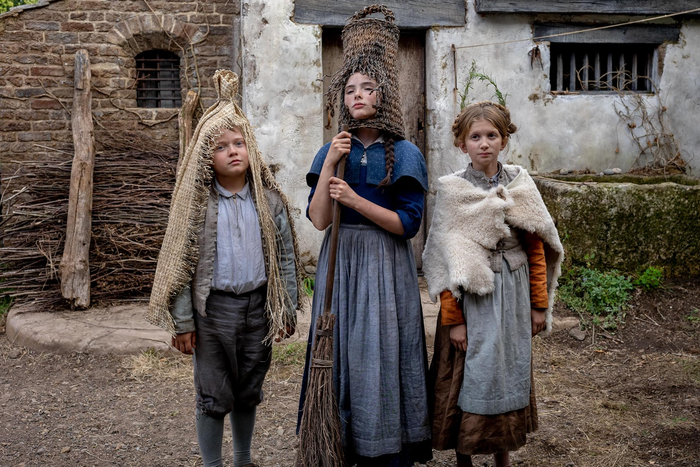
Photo: Focus Features
On paper, casting Hamnet seems like it must have been a no-brainer: Simply get two respected actors around the age of thirty. Ideally they’d both be previously Oscar-nominated. Preferably Irish. But star casting can be harder than it looks. Most big-name actors are offer-only, meaning they don’t audition. For projects like this one, casting directors essentially make a list of possibilities, and discuss with the director who to prioritize. That’s how Chloé Zhao and casting director Nina Gold wound up choosing Jessie Buckley and Paul Mescal for the leads in Hamnet. By most accounts they made the right choices. “Anytime you cast contemporary actors who can convince you that they belong in a different time period, yet still feel relevant today, that’s always good,” says one casting director. “Not everyone can handle that language.” In further proof of a job well-done, Buckley looks set to walk away with the Best Actress trophy.
But the Hamnet campaign seems to be betting that more Oscar-worthy feat was finding the titular character: Shakespeare’s doomed 11-year-old son. As one of the U.K’s most venerated casting directors, Gold has a long track record unearthing brilliant young talent. (She discovered an entire generation of child actors for Game of Thrones.) She told Awards Buzz that finding Hamnet was a “gigantic process.” Auditioning kids is usually a war of attrition: You’ve got to see as many as possible, often as many times as possible. “You can’t cut the corners of having a thorough and quite grueling process,” Gold told the site. Ultimately, after meeting “loads of kids,” the needle in the haystack turned out to be Jacobi Jupe, whom she’d previously seen for a part in Jay Roach’s The Roses. He was too young for that part, but just right for this one. One Jupe led to another: After Jacobi was cast, Gold kicked around the idea of bringing in his older brother, Noah Jupe from A Quiet Place, for a cameo as the actor who plays Hamlet in the play-within-the-film. At first, scheduling conflicts put a kibosh on that plan. But in what Gold called an “incredible bit of serendipity,” Noah’s movie finished ahead of schedule, allowing Jupe the Elder to add a note of extratextual poignancy to Hamnet’s climax.
Jennifer Venditti, Marty Supreme
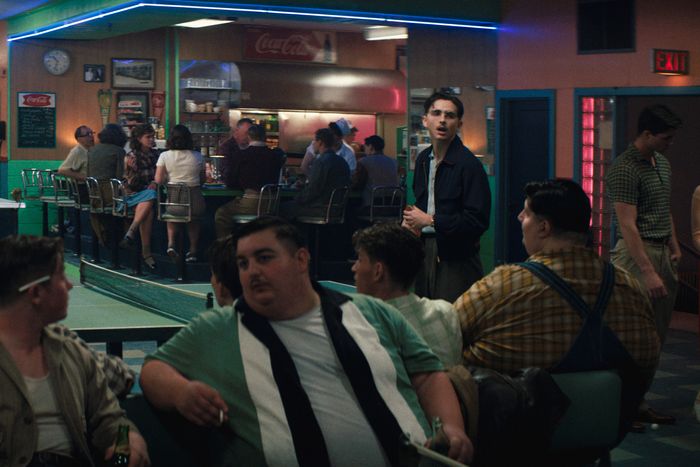
Photo: Courtesy of A24
“Everyone wants the thing that I’m doing,” Venditti said when I interviewed her for a big story about casting directors last spring. “But they don’t want to create the support that it takes to do it. Because it’s very different from traditional casting.”
Venditti got her start working in fashion, then in 2007 directed a verite documentary called Billy the Kid, which earned her cred in cinephile circles. Her speciality is finding regular people out in the wild, for projects that aim for gritty realism — American Honey, Euphoria, and the Safdie brothers’ films Good Time and Uncut Gems, which led her to casting Josh Sadfie’s Marty Supreme. (In light of last week’s news, it’s worth noting Venditti did not hire Buddy Duress for Good Time.) “I don’t really care about films,” she told one YouTube interviewer. “I’m obsessed with people-watching and the cinema of real life.”
Venditti’s practice involves extensive on-the-ground scouting for even the smallest roles, an intense interview process, and improv exercises to get the first-timers comfortable. She’s looking for friction — people who don’t blend in, but pop. Her brief on Marty Supreme included plenty of cameos from boldfaced names squaring off against Timothée Chalamet’s live-wire lead performance: writer Pico Iyer as an officious ping-pong executive, grocery magnate John Catsimatidis as a ball manufacturer, film director Abel Ferrara as a dog lover, playwright David Mamet as a theater director, and many, many more. (The villain is played by Shark Tank mogul Kevin O’Leary, but co-writer Ronald Bronstein has been getting the credit for that pick.) “Marty Supreme favors a style of acting that’s far less dependent on technique to construct scenes than on personality and presence to create moments,” the New Yorker’s Richard Brody wrote, “which explains the film’s zesty mix of professional actors with notables from other fields of endeavor.”

Click here to preview your posts with PRO themes ››
And as much as the work of production designer Jack Fisk creates the sense of being whisked back to the New York of the 1950s, so too does Venditti’s documentary-style approach to casting help Marty Supreme feel like a cinematic time capsule. The globe-trotting ping-pong epic has a cast of hundreds, and you’d swear that none of them had ever seen a cell phone in their lives.
Cassandra Kulukundis, One Battle After Another
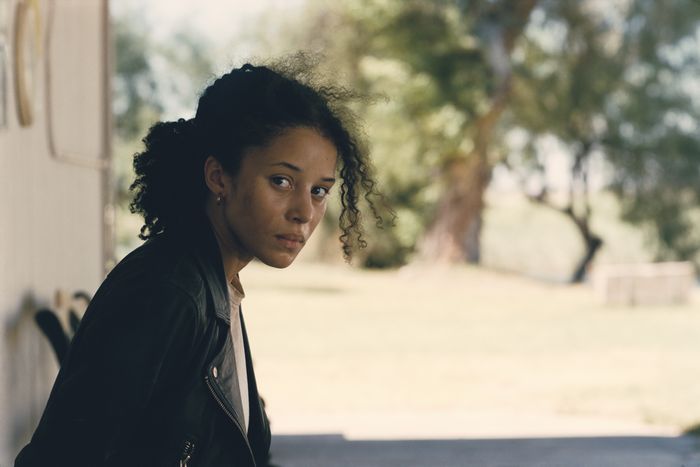
Photo: Courtesy Warner Bros. Pictures
As with Venditti and the Safdies, Kulukundis is the casting director in charge of Paul Thomas Anderson’s unofficial repertory company. She started as an intern on his debut, Hard Eight, and has cast all of his films since Magnolia. Leonardo DiCaprio came pre-attached to the project, but Kulukundis was responsible for populating the various worlds around him. “She did great work filling out the canvas of all those different people: the revolutionaries, the Latino skateboarders and the families, the Christmas Adventurers,” says a casting director. True to its origins in a Thomas Pynchon novel, One Battle After Another blends a bunch of genres that don’t seem like they should work together — imagine if Jeff “The Dude” Lebowski got stuck in the middle of Alex Garland’s Civil War — if not for Kulukundis’s casting knitting it all together: non-professionals, character actors, and one actual federal agent all sharing scenes together. (There’s even an unexpected overlap with Marty Supreme, in the presence of Yale professor Paul Grimstad.)
“These worlds are all very provocative,” the casting director says. “Those tonal things, when you’re treading a line, are sometimes tricky for casting directors to get right. What a treat to be able to cast such a varied canvas.”
Other members of the film’s ensemble, like Regina Hall, were hired by Anderson directly, but Kulukundis was responsible for finding the film’s hardest-to-cast character. The part of Willa, DiCaprio’s character’s daughter, needed to be played by a biracial actress who read as high-school-aged but had the gravitas to hold her own against DiCaprio and Sean Penn — and ideally also had martial arts experience. One Battle’s campaign has been highlighting the difficulty of this search, which lasted over five years. Kulukundis discovered Chase Infiniti when a friend sent her a recording of Infiniti’s K-pop dance troupe. Though she immediately noticed something special about her, Anderson took more convincing. Together they put Infiniti through months of screen tests and chemistry reads before PTA finally saw what his casting director did. As Kulukundis told Backstage, “She had the best balance of pure innocence and ‘I will kill you.’”
Gabriel Domingues, The Secret Agent
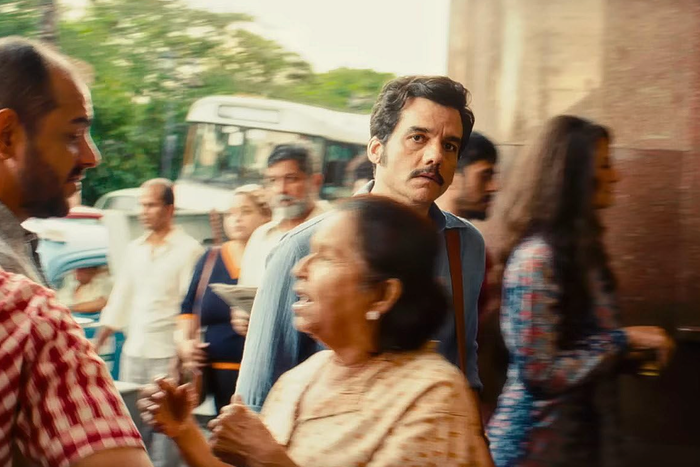
Photo: Neon
One word that people in casting love to use is organic. “I don’t want to see the fingerprints,” a casting director told me. In other words, unless you’re going for that specific effect, you don’t want an ensemble to feel like a group of actors; you want it to feel like a collection of faces that have been pulled from an actual environment.
That’s the reason Gabriel Domingues’s work on The Secret Agent — the only non-English language Casting nominee — has been so widely acclaimed. The film takes place in Brazil in the late 1970s, and the way Domingues assembled its human fabric, even those viewers who were never there now feel as if they’ve visited. Those who were there were even more effusive. “I saw it with a friend of mine who used to live in Brazil,” a casting director said. “He said, ‘I’m having a sense memory. Everything about this movie, they got it correct.’ It really felt like you were dropped into a world.”
The Secret Agent’s primary setting is a house full of misfits and refugees in the northeastern city of Recife, a safe harbor from those persecuted by the country’s military regime, ruled over by the inimitable Dona Sebastiana (Tânia Maria, whose role was written specifically for her). Director Kleber Mendonça Filho “wanted to create a universe that was very faithful to the atmosphere and energy of the 1970s,” Domingues told Indiewire. “That meant finding certain faces that looked like they might have existed in 1978.” Besides reflecting the diversity of northern Brazil, his work involved an unconventional sort of research; one character, a hired assassin, was meant to resemble a famous serial killer of the period. “In the 1970s, Brazil had even more social inequality than we do now,” Domingues said. “The economic disparity was even worse. So it was important to find people who looked like the specific types of people who would be working in each job at that time.”
Of the five Casting nominees, The Secret Agent is the only one that wasn’t also nominated for Best Cast at SAG’s Actor Awards. But if it is the one that ultimately prevails on Oscar night, its colorful cast — a seamless mix of first-timers and professionals — will be the reason why.
Francine Maisler, Sinners
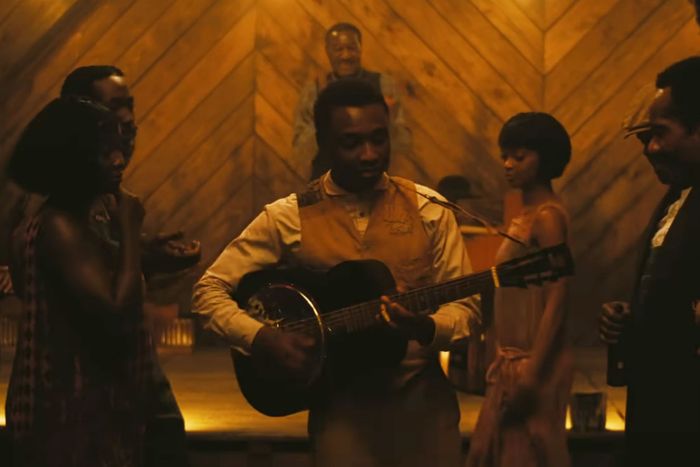
Photo: Warner Bros.
When I asked casting directors last year what factors they would take into consideration when voting on the Oscars, a few mentioned degree of difficulty: finding people who could not only act, but also sing and dance. (Many people, not all of whom worked on Wicked, brought up Wicked in this context.) That was the hurdle for Francine Maisler on Sinners, a film built around show-stopping musical numbers. Not least because the character of Sammy, a young juke-joint performer, was also meant to be the film’s secret protagonist. After apparently “thousands” of auditions, Maisler landed on Miles Caton, an up-and-coming musician from Brooklyn who had no previous film experience.
“I’m not a religious person, but when Miles opened his mouth, I thought there’s got to be something upstairs that gives us this voice that comes through this young man,” Maisler told Casting Networks. “It felt otherworldly and beautiful, and it touched me deeply.” It also touched the actors in SAG, who handed Caton a supporting-actor nomination.
Though Sinners takes place even further in the past than Marty Supreme or The Secret Agent, as a vampire thriller it’s less focused on period verisimilitude. Casting genre films is different from casting prestige dramas, a casting director told me. It’s not that you take it less seriously. “But it’s heightened. That has to just deal with the nature of the film itself, the tongue-in-cheek sense of humor that it has. Jack O’Connell, Delroy Lindo — it’s fun to cast actors who can play it heightened, but also keep it real.” Or think of someone like Hailee Steinfeld, who might seem a bit too modern for a straight 1930s period piece, but fits in with the Southern Gothic tone Ryan Coogler was aiming for.
The other thing Sinners’ campaign has going for it is Maisler herself. In Hollywood, she is considered “first among equals,” one casting director told me — an industry legend whose resume includes over a dozen Best Picture nominees, including winners 12 Years a Slave and Birdman, as well as Succession. If voters want the inaugural Casting Oscar to reflect the years of invisible work that previously went unrewarded, there might be no better symbolic pick.
Sign up for Gold Rush
A newsletter about the perpetual Hollywood awards race.