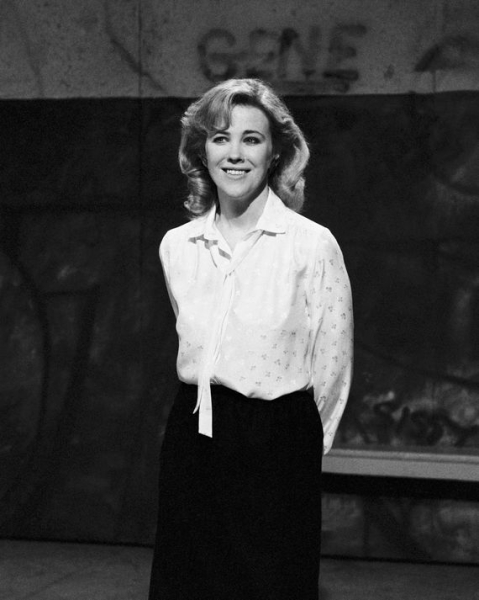
Catherine O’Hara, who died January 30 in Los Angeles, will be remembered for her capacity to convey enormous feeling with the smallest movement of her face. She could slide from pleasant blankness to overwrought terror in an instant; she could wield immense power with a polite nod. With her frequent onscreen partner Eugene Levy, O’Hara morphed into a dozen different guises: She was the wide-eyed innocent in Waiting for Guffman, then weaponized that naïveté into a steely competence in Best in Show. By A Mighty Wind, she was Levy’s world-weary ex, like a frustrated and folksy Stevie Nicks to his curt Lindsey Buckingham, each of them equally manipulative and wounded.
But O’Hara is best known for her role as Kate McCallister in Home Alone, the distracted, frantic, righteously determined mom to Macaulay Culkin’s precocious 8-year-old Kevin. Without ever turning her own family into public figures, O’Hara became Ur-mother for an entire generation of kids who never before had a cultural model that so closely reflected their own experience of childhood. She was not the perfect June Cleaver, nor was she a nightmarish, self-absorbed Mommy Dearest. She was flawed, she was stretched thin, and she made mistakes. Then, full of fury and self-recrimination and exhaustion, she asked her son for forgiveness, and she told him how much she loved him.
Home Alone’s flashiest role is the charismatic lead performance from Culkin, but Kate McCallister is the key to making that story work. It is an impossible task. O’Hara has to begin the 1990 film as a mother who is so frustrated and flighty that she does something fundamentally unforgivable, leaving her 8-year-old at home while the rest of the family gets on a transcontinental flight. The circumstances are implausible enough that O’Hara must carry the entire burden of convincing audiences of her own unlikely mistake. When the realization dawns on her mid-flight and she turns to her husband, mouth agape, the horror and guilt on her face must persuade us to root for Kevin to forgive her by the end.
The previous night, Kevin made one last attempt to avoid the punishment of having to sleep in the house’s scary top attic. “I’m sorry,” he says, feigning repentance. “It’s too late,” O’Hara tells him. “Get upstairs.” The camera lingers in close-up on O’Hara’s face as Kevin shouts back, “I don’t want to see you again for the rest of my life!” O’Hara doesn’t scream or slam the door, but with the merest shift in her eyes, it’s clear her feelings are hurt. She wants Kevin to understand the gravity of what he’s saying, but she needs to hide that she’s sincerely wounded. Her face communicates an internal struggle in this moment: This is not a devastating or even all that unusual maternal injury for her. It is one more in a pile of stresses and slights.
In those early scenes of Home Alone, O’Hara is not just an avatar for a forgetful, imperfect mother. She’s an encapsulation of an entirely new kind of maternal ideal, one that could not exist before the surge of women in the workforce in the ’70s and ’80s birthed the corporate mother. As Kate reprimands her son, she’s wearing a beautifully tailored tan suit over a dry-cleaned dress shirt buttoned all the way up to the collar. In any lesser performance, that character could’ve hardened into a villainous fairy-tale creature, the uncaring mother who has abandoned her child for the sake of her own unnatural career ambitions. Instead, it’s not until Kate McCallister realizes Kevin’s been left by himself that she transforms into a being of astonishing, unstoppable force. O’Hara brings all the sharp-edged professionalism of her business suit and earth-toned paisley shawl down like an avenging god on whatever useless airline employee, unhelpful cop, or rude fellow traveler stands in her way. Like that earlier scene by the stairs, it would be so easy for her to slide into inhuman absurdity here, but even when she’s screaming with fury or weeping with regret, O’Hara keeps the character rooted in something honest and familiar. She is the modern mom par excellence — endlessly apologetic, doing her best yet constantly failing, always tapping into a well of love and humor and wisdom even as she’s falling apart. O’Hara’s performance transforms Home Alone from a ridiculous, pratfall-ridden caper film into an all-time monument to the very simple yet endlessly radical idea that mothers are people, too.

Click here to preview your posts with PRO themes ››
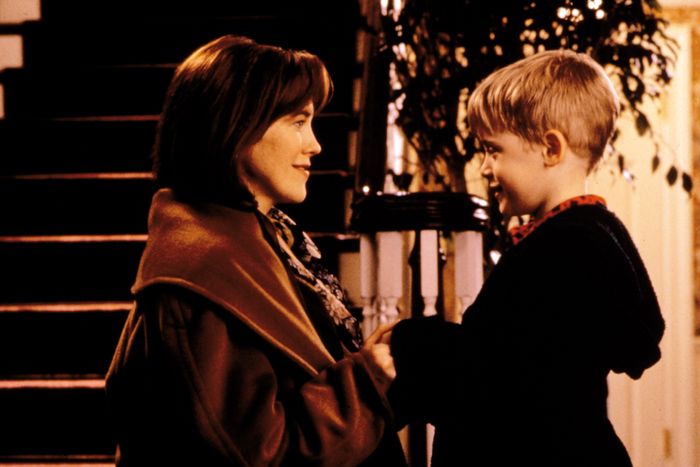
With Macaulay Culkin in Home Alone. Photo: 20th Century Fox/Courtesy Everett Collection
O’Hara’s second best-known role was Moira Rose, the matriarch of the warm, riches-to-rags sitcom Schitt’s Creek. Where Kate McCallister was the American Everymom, washed-up Hollywood star Moira Rose allowed O’Hara to lean into something deliciously cruel and absurdist. She delivered Moira’s punch lines with unblinking placidity, declaring that her favorite season was “awards,” flouncing into and out of rooms with the confidence of a woman used to being the center of attention, and perpetually turning her adult children’s complaints into tirades about all the indignities she has been forced to endure. Moira was O’Hara in full sketch mode, charging each elaborate costume and line of dialogue with so much inanity the character should never have been believable as a real person. In a show full of caricatures, Moira was the loudest and least plausible.
But even in this form, O’Hara has such a precise grip on the performance that with just a flicker of her face, she steers Moira back toward humanity. Schitt’s Creek, like Home Alone, is a portrait of a particular kind of contemporary family, and although it begins as a story about wealthy assholes confronting their own privilege, it ends as a homily about parents learning how to tell their children they love and support them. Crucially, Moira never truly changes. She attempts, briefly, to fit into their new small town, or to make herself lesser in order to support her adult children’s needs, but it never sticks. She keeps bouncing back, as flighty as ever and probably wearing a new wig. As Schitt’s Creek slowly gives the Rose family more empathy, Moira learns to broaden her obsessive focus on beauty and fame so that she can really see her kids for who they are. Her most potent moments are not any of her bizarrely mannered speeches or her attempts to regain any of her old glory; they’re Moira looking adoringly at her son, David, as he declares his love for his boyfriend, Patrick.
O’Hara’s loss feels cruel because she was continuing to do fantastic work. She was the highlight of any project she joined, most recently HBO’s The Last of Us and the Apple TV comedy The Studio. Losing O’Hara feels like losing an indelible cultural depiction of motherhood, all the more so because she was not portraying an all-knowing, all-powerful image of maternal grace. She was frazzled and sharp and compassionate. She apologized for her mistakes. She did not apologize for stealing every single scene she was in.