The 42nd edition of the Sundance Film Festival will be primarily remembered as the fest’s last hurrah in Park City, Utah, where Sundance was founded and has matured into North America’s preeminent showcase for independent film.
But leaving to the side the days when Chloé Zhao first tromped down Main Street in a puffer jacket, Kevin Smith organized a counterprotest to Westboro Baptist Church agit-idiots picketing his Fundamentalist horror movie Red State, and 26-year-old Ryan Coogler picked up a Grand Jury Prize for Fruitvale Station, Sundance is — and remained until its last moment screening new things in Utah Sunday evening — a locus of commerce. Out of the 90-odd films and episodic series premiering at this year’s fest, only 11 arrived with presold distribution deals. Which meant most of the other scrappy indies came seeking to capitalize on the Sundance imprimatur.
While breakout titles from last year’s Sundance are amply represented among this year’s Academy Awards nominees — Best Picture contender Train Dreams and If I Had Legs I’d Kick You (starring Rose Byrne, whose stressful, exhausting performance landed her a Best Actress berth), and all five feature documentary entries among them — the pace of sales at the 2025 festival slowed to a standstill. Every single one of the major acquisitions (like the Midnight selection body-horror Together, which sold for $17 million to Neon) took place once the action had wrapped in Park City. Since the COVID era, festival deals have increasingly taken place farther and farther from fest environs. So the question heading into January 2026: Would studios keep their wallets shut for the duration of Sundance again?
Although the days when streamers like Amazon and Netflix would pull up in Park City and sprinkle eight-figure distribution deals across the snowy landscape like so much pixie dust are a thing of the past, this year turned out to be hybrid in terms of on-site and impending off-site sales. Against a backdrop of national unrest and unfolding concurrent to a mass protest along Main Street called “Sundancers Melt ICE,” the fest’s 11-day run included two old-school bidding wars that culminated in splashy deals and two other major pickups. And now, according to sales agents from major talent agencies and an indie-film advisory (all of whom spoke with Vulture on background), there are “a ton” of offers on a wide range of different titles that are pending. To hear them tell it, you’ll be hearing about the acquisitions announcements over the coming weeks.
Director-star Olivia Wilde’s chamber dramedy The Invite arrived at Sundance within a hive of pre-festival buzz and after its January 24 premiere proceeded to kick off a 72-hour bidding war. Apple, Neon, Focus Features, Searchlight, New Jack distributor Black Bear, and Netflix were among those to bid up the film — with the Don’t Worry Darling filmmaker reportedly specifically DQ-ing Netflix thanks to her demand for a traditional theatrical release. But in the end, A24 toppled its final competitor, Focus, by ponying up a bid “north of $12 million” for domestic rights to the remake of the Spanish comedy The People Upstairs. “I just think it proves every single time that the movies made outside the studio system, and therefore with the freedom to allow for creative experimentation, they are always the ones that ultimately the studios end up recognizing as valuable,” Wilde said at Sundance’s Future of Filmmaking keynote discussion, “because those are the movies that audiences want, and we see that every year.”
According to agents, every edition of Sundance showcases two or three titles that play strongly enough at their premieres, arriving fully fleshed as inescapable topics of festival conversation, to become “urgent” enough to bid up “on the ground” in Park City. This year, the second such film was writer-director Adrian Chiarella’s queer horror breakout Leviticus. The strongly reviewed Midnight section entry marks erstwhile Aussie ingénue Mia Wasikowska’s return in in front of the cameras after burning out on Hollywood and spending three years “disconnected”; Indiewire piquantly notes the thriller “plays like an episode of Heated Rivalry ghoulishly crossed with It Follows.” Premiering January 23, Leviticus sparked a smaller-scale bidding war and sold global distribution rights to Neon for around $5 million.

Click here to preview your posts with PRO themes ››
After receiving a standing ovation at its opening-night premiere, the crowd-pleasing, Japan-set ballroom-dancing drama Ha-Chan, Shake Your Booty! quietly sold to Sony Pictures Classics for an undisclosed sum. And on January 30, Sony’s art-house division opened up its checkbook again to acquire Bedford Park. First-time writer-director Stephanie Ahn’s romantic drama (centering on a New Jersey woman struggling to reconcile her loyalty to her Korean immigrant family with her American identity) also claimed Sundance’s U.S. Dramatic Special Jury Award for Debut Feature. (Again, no dollar figure was provided for SPC’s buy.)
As the sales agents tell it, on-site acquisitions deals may have ticked upward this year in part thanks to the newly assertive presence of several newish studios and rebooted film-distribution units. Among them: an as yet unnamed contemporary-film label from Warner Bros. (headed up by former Neon CMO Christian Parkes, the marketing mastermind behind the Longlegs and Parasite campaigns), Row K Entertainment (whose inaugural release, the Gus Van Sant–directed bank-robbery drama Dead Man’s Wire, was acquired out the 2025 Venice International Film Festival), Black Bear (behind the misbegotten Sydney Sweeney awards vehicle Christy), and Paramount’s “acquisitions only” division Republic Pictures.
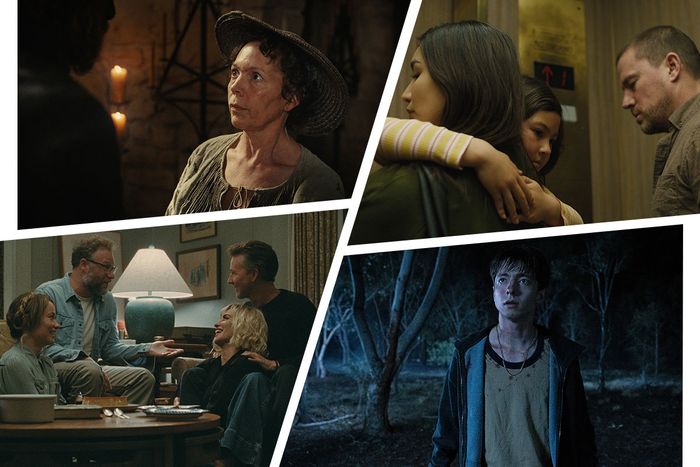
As the sun finally set on Sundance 2026, concluding the festival’s four-decade Utah run Sunday, studio interest continued to swirl around such breakout titles as Wicker (featuring Olivia Colman as a sardonic fisherwoman who asks a basket weaver to weave her an Alexander Skarsgård–shaped husband) and Josephine, the devastating Channing Tatum–Gemma Chan dramatic two-hander that picked up the fest’s U.S. Grand Jury Prize (Dramatic) and Audience Award (U.S. Dramatic).
Sundance traditionally serves as something of a bellwether for the movie industry — providing indications of the health of the indie-movie marketplace but also a kind of unofficial vibe check for movie producers, studio execs, agents, and teeming cadres of public-relations professionals. I ask Sundance’s festival director Eugene Hernandez and director of programming Kim Yutani about their metric for festival success. How important is the volume of sales to whether it’s been a good Sundance?
Even at a time when fewer and fewer indie movies are being projected inside theater auditoriums and the number of major Hollywood studios is appearing to dwindle, they feel film sales are not as important as the cultural dialogue Sundance habitually sparks. “Deal announcements are one component because they’re higher-profile and get covered more broadly,” Hernandez says. “But now these films are out in the world. Every film has had its premiere. And now the conversations have started.”
Yutani places the conversation around commerciality within the context of Sundance’s original aim: as an antidote to Hollywood’s bottom-line orientation. “These filmmakers are so nervous; they’re showing their films to audiences for the first time,” she says. “I don’t know how many tears I saw before screenings, but also after. Because their lives have been transformed in a two-hour span.”
“Our goal is to have a festival that’s successful on multiple levels,” Yutani continues. “On an audience level. An artist level. And on a community level — it’s a lot! So, we’re happy when sales happen. Those are notable moments at the festival. But it’s not the focus.”